
1. Introduction
One of the great challenges of strategy has been the extensive debate about its definition, meaning and use (Betts, 2000; Black, 2020; Freedman, 2013, 2017; Gaddis, 2019; Milevski, 2016; Nolan, 1989; Scott, 2021). Strategy has been expressed in many different ways, for example as a ‘course of action that integrates ends, ways and means to meet policy objectives’ (Ministry of Defence, 2017, p. 6); a ‘plan of action designed in order to achieve some end … a purpose together with a system of measures for its accomplishment’ (Wylie, 2014, p. 14); a ‘central rule’ (Compo, 2022, p. 10); ‘the art of creating power’ (Freedman, 2013, p. 607); a ‘theory of victory’ (Cohen, 2002, p. 33); ‘a theory of success’ (Meiser, 2017, pp. 86–87); and as the mathematical formula ‘strategy equals ends (objectives toward which one strives) plus ways (courses of action) plus means (instruments by which some end can be achieved)’ (Lykke, 1997, p. 183). Strachan famously asserted the meaning of strategy had become lost through the ‘conflation of strategy and policy’ and ‘strategy’s propensity to replace policy’ which resulted in the ‘militarisation’ of policy (Strachan, 2005, pp. 36–43, 52).
Another serious problem of strategy is the reverse of that argued by Strachan: the potential for strategy to be replaced by tactics. Some scholars have labelled this phenomenon ‘tacticisation of strategy’, arguing it was the cause of devastating strategic failures including Ludendorff’s ‘last offensive’ of 1918, Rommel’s North Africa campaign in the Second World War, and America in Vietnam (Handel, 2001, pp. 353–360). Handel claimed tacticisation caused strategy to fail as often as it succeeded by allowing ‘operational or tactical considerations [to] influence strategic decisions often as much as they are influenced by them’ (Gray, 2016, p. 247; Handel, 2001, pp. 353–354). Australia is not immune: its recent contributions in Afghanistan arguably demonstrate the hallmarks of tacticisation (Hocking, 2022, Key Organisational-Level Lessons 1–6, 8). However, unlike strategy, tacticisation of strategy has not been examined in detail by academic literature. Studies that exist are mostly cursory and ambiguous, with authors offering contradictory interpretations. Given the potentially existential consequences of failed strategy, we should not be content with this lack of clarity. Politicians and Defence practitioners responsible for developing and executing strategy are unlikely to be knowledgeable of tacticisation as a concept, and unable to manage its effects.[1] Providing clarity about tacticisation is therefore highly valuable.
In the context of this study, ‘strategy’ means a specific plan concerning the direction and use made of means, by chosen ways, to achieve desired ends. Its function is to cope with a particular historical context in time and space (Gray, 2010, pp. 8, 9, 15, 83). This should not be confused with the second element of Grey’s definition, being a general theory applicable to all contexts (times and spaces), for the purpose of educating strategists. ‘Tactics’ refers to actual military behaviour. Tactics is how strategy is executed (Gray, 2015b, pp. 26, 39, 40).
Here, I review and compare existing literature using a graphical form of the well-known levels of analysis heuristic comprising grand strategy, strategy, operations and tactics. The review begins with the work of the largely unrecognised originator of the concept, former Israeli intelligence chief Yehoshafat Harkabi. Next, I discuss Handel’s concept of tacticisation given that his work is the most often cited. I then discuss other scholars’ concepts, beginning with those who have provided the least significant contributions, and finishing with Colin Gray who discussed tacticisation in several works. The aim is to identify the characteristics of tacticisation as conceived by these authors, and whether they agree on how tacticisation manifests and influences strategy.
2. Literature review
Only thirteen scholars have analysed the concept of tacticisation explicitly, and the majority only briefly. A range of different interpretations exist, which is notable given the same originating source is persistently cited: Masters of War: Classical Strategic Thought (Handel, 2001). Handel himself did not conduct a detailed examination: in Masters of War, he addressed the concept as part of a seven-page appendix. This literature review demonstrates the near-universal practice of leveraging Handel’s work, and the absence of thorough examination by any scholar has not prevented a proliferation of different explanations for the concept of tacticisation.
2.1. Yehoshafat Harkabi
Harkabi’s account of tacticisation, in an Israeli context, is contained in his book Israel’s Fateful Hour (Harkabi, 1988), which is an English translation of his original work entitled, Hachraot Goraliot. While he provided no definition, Harkabi drew on American diplomat George Kennan’s metaphor for good diplomacy, distinguishing between ‘gardeners’ who ‘laid the groundwork and nurtured growth’ and ‘mechanics’ who were geared to ‘dramatic improvements from a single, decisive move’ (Harkabi, 1988, p. 76). Tacticisation occurred when political leaders acted like mechanics, treating war as a ‘drastic event’ and ‘wag[ing] the war as if it were a battle’ rather than recognising ‘war is not an event, but a process; a battle is an event … [at] the strategic level … a single battle is not conclusive … tactical gain in a battle does not necessarily mean gain in a war’ (Harkabi, 1988, p. 93).
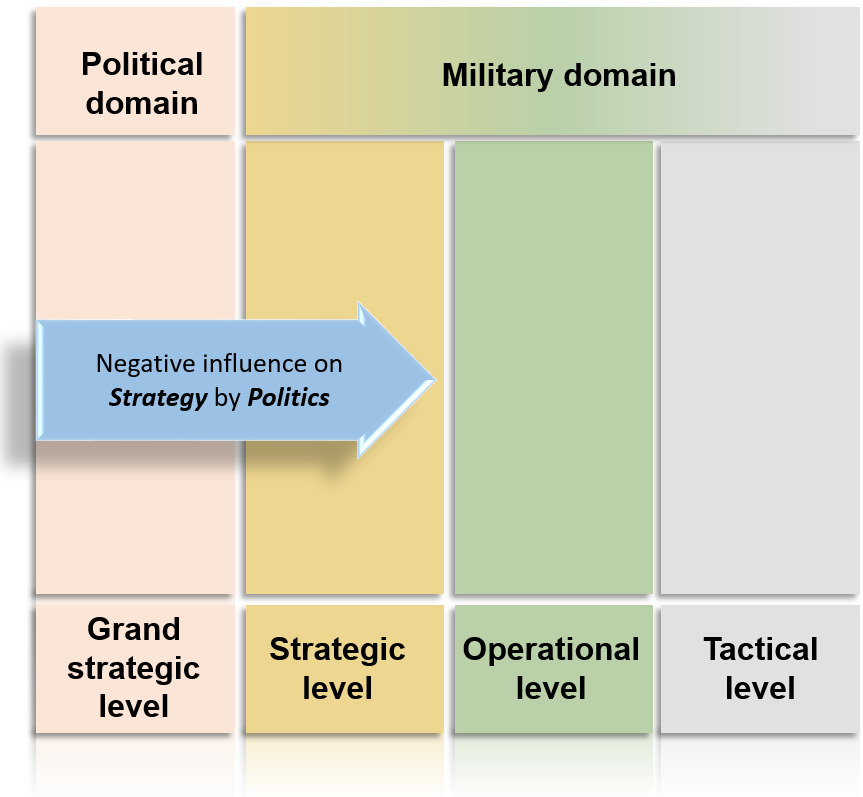
The problem conceived by Harkabi was politicians immersing themselves in tactics and ignoring strategy. Tacticisation was a dual failure by those in the political domain. The first failure occurred when politicians did not provide grand-strategic influence on military strategy:
[P]olitical leadership must guide the military on major questions, explaining the strategic goals to them as well as how the planned operation fits in with the historical circumstances and with other political and diplomatic activities it is undertaking. It must likewise provide direction as to what should be achieved and what avoided … [not] merely rubber-stamp … a decision that had been made for them without guidance or comment on their part, as if they had no choice (Harkabi, 1988, p. 96).
The second failure occurred when politicians involved themselves in sub-strategic activity, as Israeli ministers did in the First Lebanon War:
The Lebanon War … was conducted as a campaign, not as a war … the minister of defence, served as the chief of staff, operating from the forward command posts … the supreme command focuse[d] on the tactical level instead of the strategic (Harkabi, 1988, p. 96).
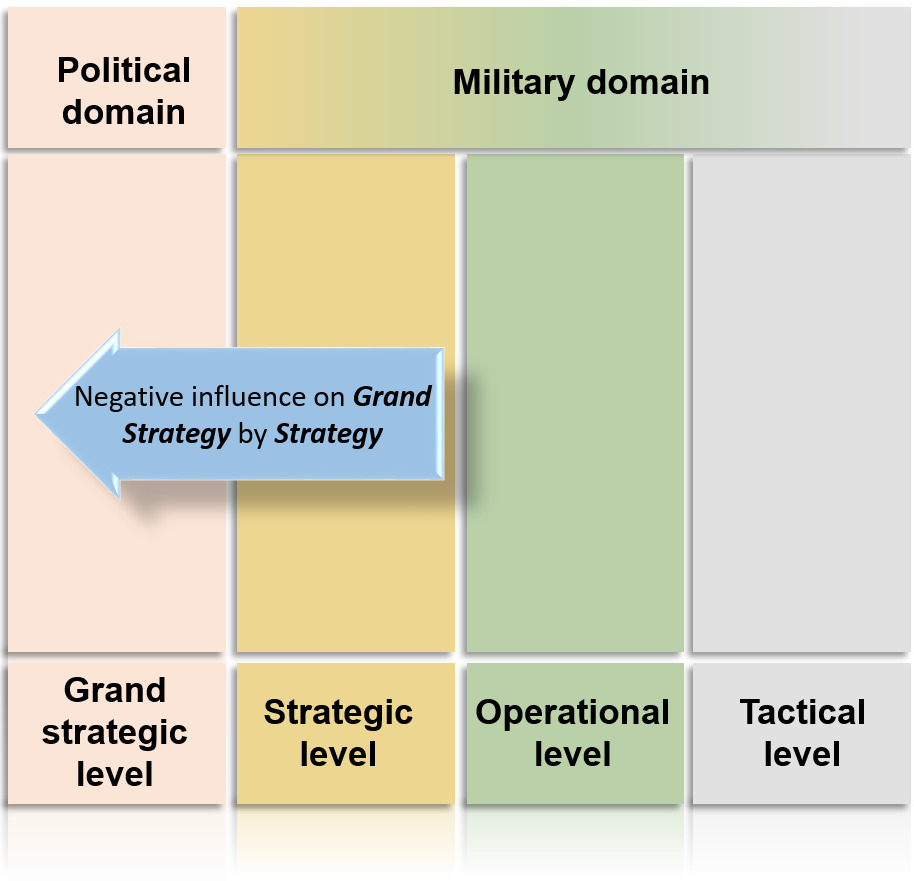
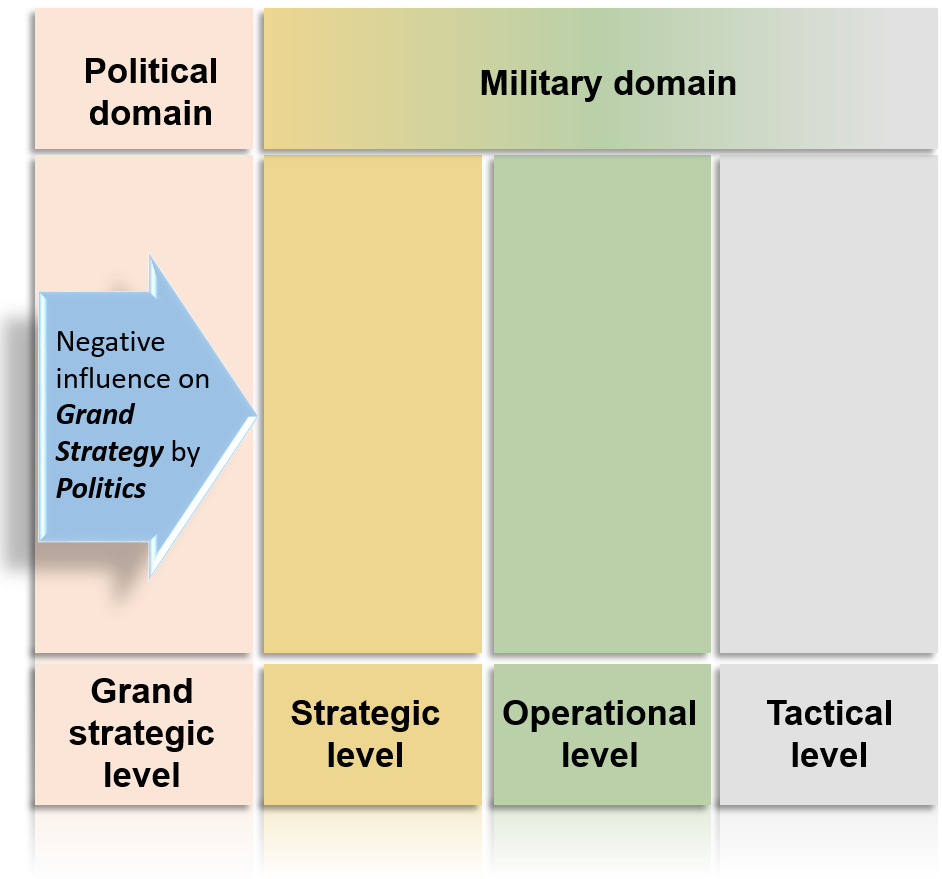
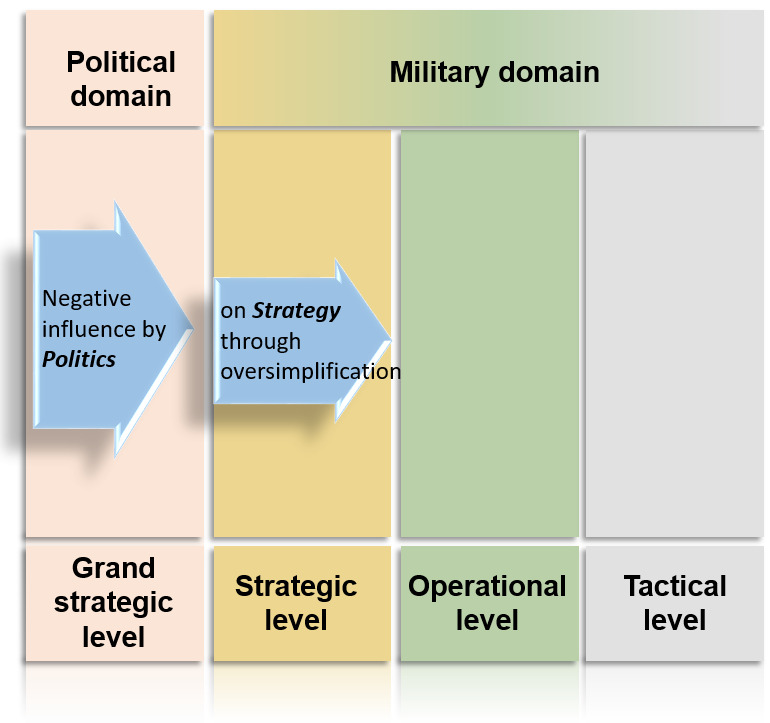
For Harkabi, tacticisation was the negative influence of politics on military strategy through both act and omission: a failure to provide guiding grand-strategic influence, and a failure to refrain from providing unwarranted tactical influence, by the political domain, directed to the military domain (Figure 1). Harkabi made clear the phenomenon did not manifest as misapplied influence by the military domain, directed to the political domain. The problem was not that politicians were improperly advised by their Generals. ‘The problem was inherent in the way of thinking’ within the political domain (Harkabi, 1988, p. 95).
_failure.png)
2.2. Michael Handel
Handel (1994) first mentioned tacticisation in his chapter of The Making of Strategy: Rulers, States, and War, where he credited Harkabi (1988) as the originator of the concept (Handel, 1994, fn 69). Like Harkabi, Handel criticised Israeli strategy as being reactive, disproportionately prioritising the immediate problem of national survival over longer-term objectives:
Israeli decision-makers have acted according to operational imperatives without a clear conception of long-range objectives and without assessing the ultimate consequences of operational success. Instead of strategy governing the use of force, the logic of military operations often determined that of strategy. The domination of military considerations and the fact that the Israeli military determined national security policy and strategy, restricted the scope of Israeli strategy and permitted short-range operational pressures to take precedence over key long-range considerations (Handel, 1994, p. 570).
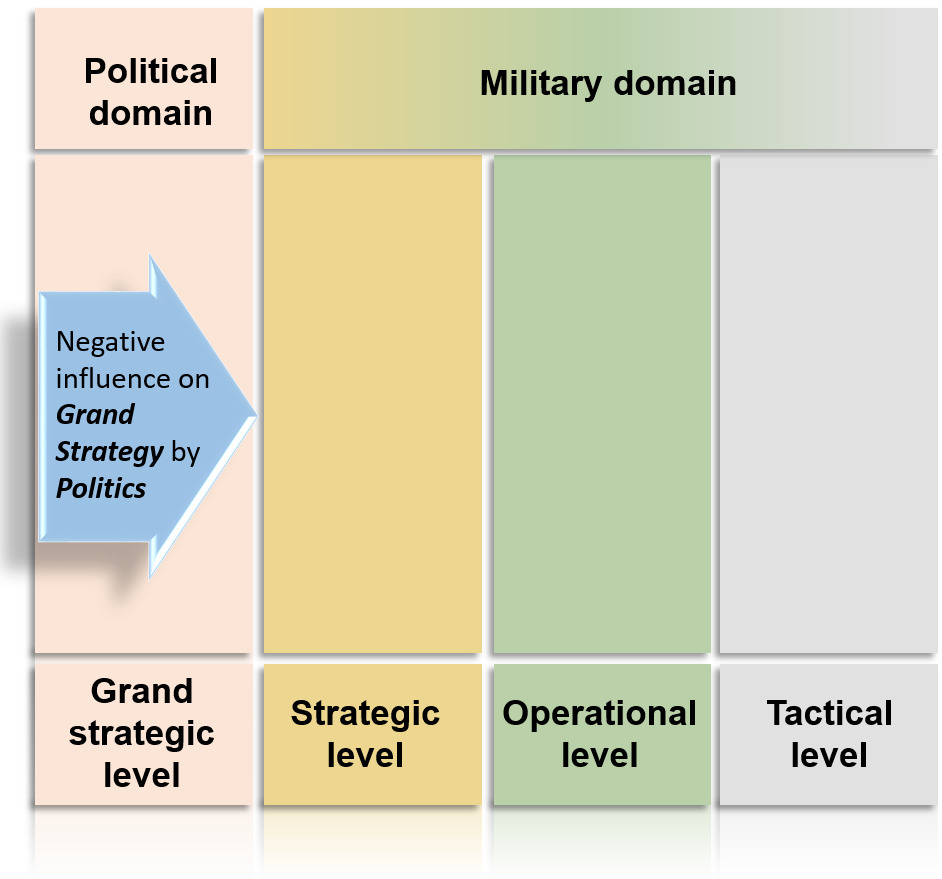
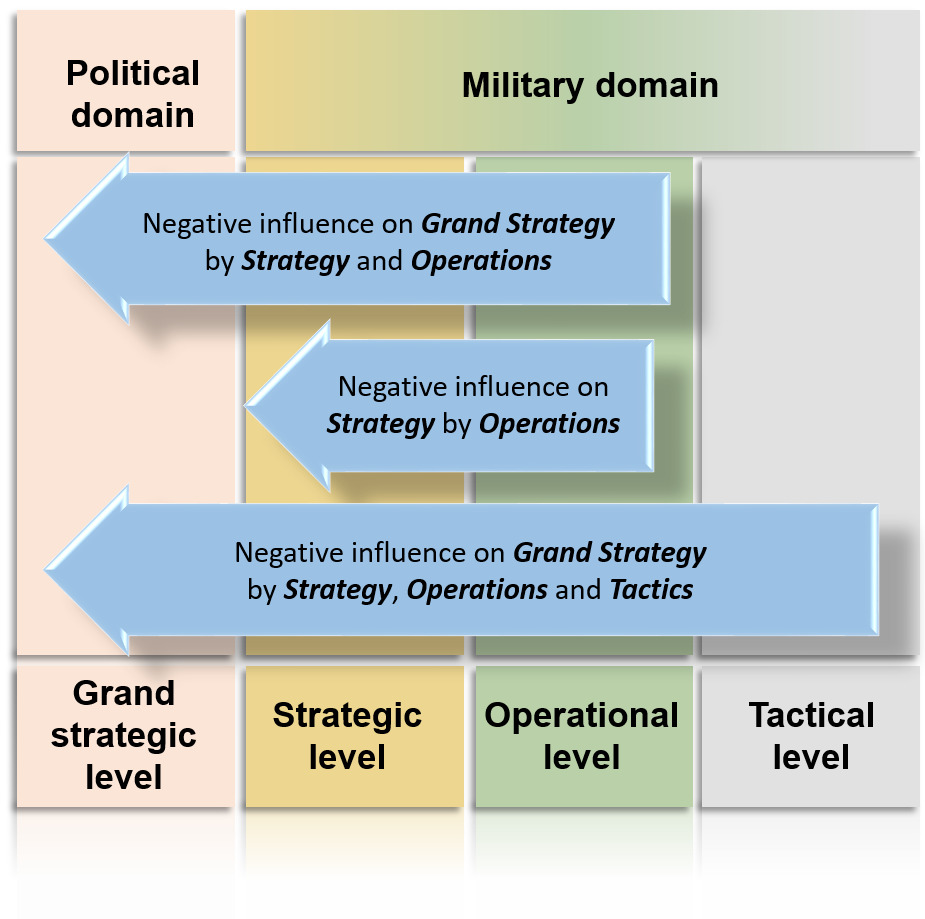
Handel provided no further analysis but his brief description appears clear enough: tacticisation occurs when military operations determine grand strategy, enabled by the military dominating the political domain. Note the direction of influence is opposite to Harkabi’s: Handel argues it is the military that exerts improper influence on the political domain. Handel reproduces only one element of Harkabi’s dual failure, perhaps because the second element makes no sense with the direction of influence reversed: it is nonsensical to argue the military has a responsibility to provide grand-strategic influence into the political domain, and it fails if this is not undertaken.
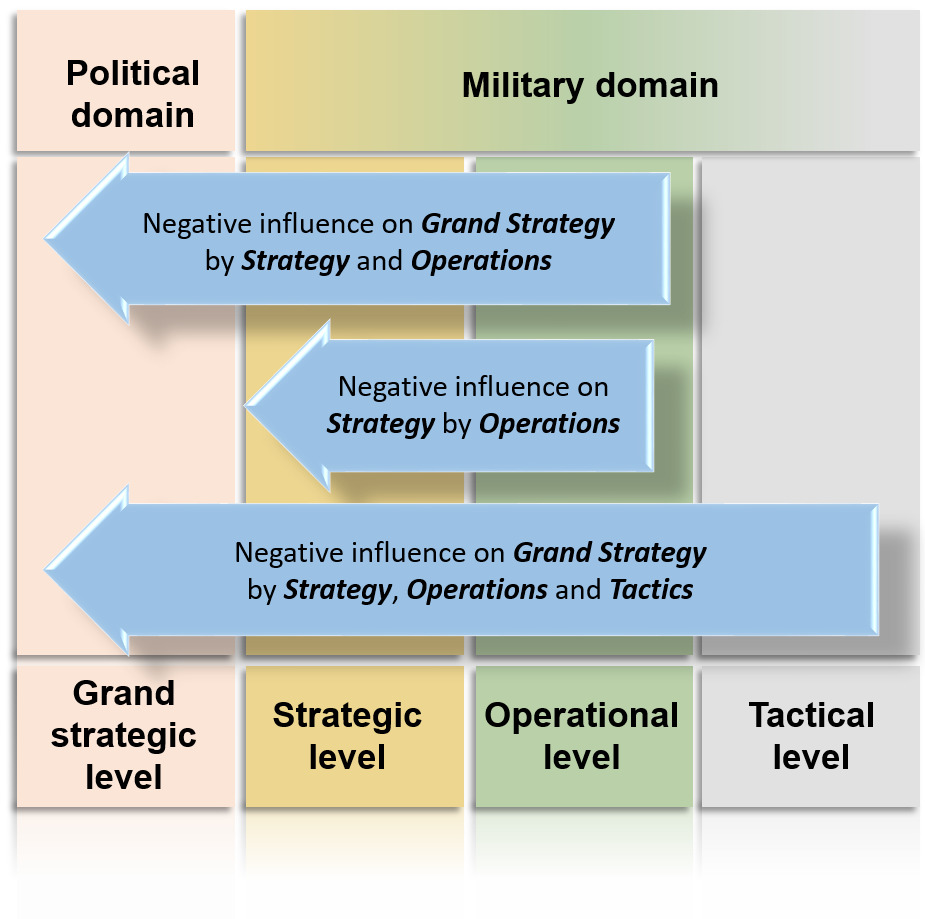
Handel’s later work Masters of War provided additional explanation: possibly the reason it is cited by scholars, in lieu of his 1994 work. Notably, Masters of War made no attribution for the concept, resulting in most scholars citing Handel, not Harkabi, as the original source. Like Harkabi, Handel provided no clear definition, instead offering three, somewhat contradictory, explanatory statements: ‘the de facto primacy of military over political considerations’; ‘lower-level operational considerations defining strategy in war’; and ‘the operational or military tail wagging the political-strategic dog’ (Handel, 2001, pp. 73, 355). The first statement pits the concept as the influence of military considerations (be they tactical, operational or military-strategic) on the political (grand-strategic) level. The second reduces tacticisation to a military problem, specifically the influence of the operational level on the military-strategic level. The third views tacticisation as the influence of the military’s operational and strategic levels on the grand-strategic level. The consequence is ‘strategy is not consciously formulated, it emerges by default. Instead of being the driving force in war, strategy becomes a mere by-product or afterthought’ (Handel, 2001, p. 354).
Handel’s conception is interpreted in Figure 2. Comparing Figures 1 and 2, it is clear that Handel did not replicate Harkabi’s conception of tacticisation. This has gone unnoticed by scholars, because the link between Harkabi and Handel is non-existent in the often-cited Masters of War.
2.3. Authors dealing cursorily with tacticisation
Around 60 authors refer to tacticisation but provide little explanatory detail (Hood, 2022). In one case (Rabaey et al., 2004, p. 8), tacticisation was referenced in a manner that suggested it could provide a beneficial influence on strategy. In a later work, however, Rabaey’s thinking evolved to view tacticisation as a problematic influence (Rabaey, 2015, pp. 40, 72). Only Sayigh (1992), Naor (2005, p. 235), Lavie (2010, p. 108) and Petrelli (2013, p. 165) cite Harkabi (1988) as the originator of the term ‘tacticisation of strategy’. Most works cite Handel (1994, 2001). Smith and Jones (2015, p. 27) attribute tacticisation to Colin Gray.
2.4. Ben Zweibelson
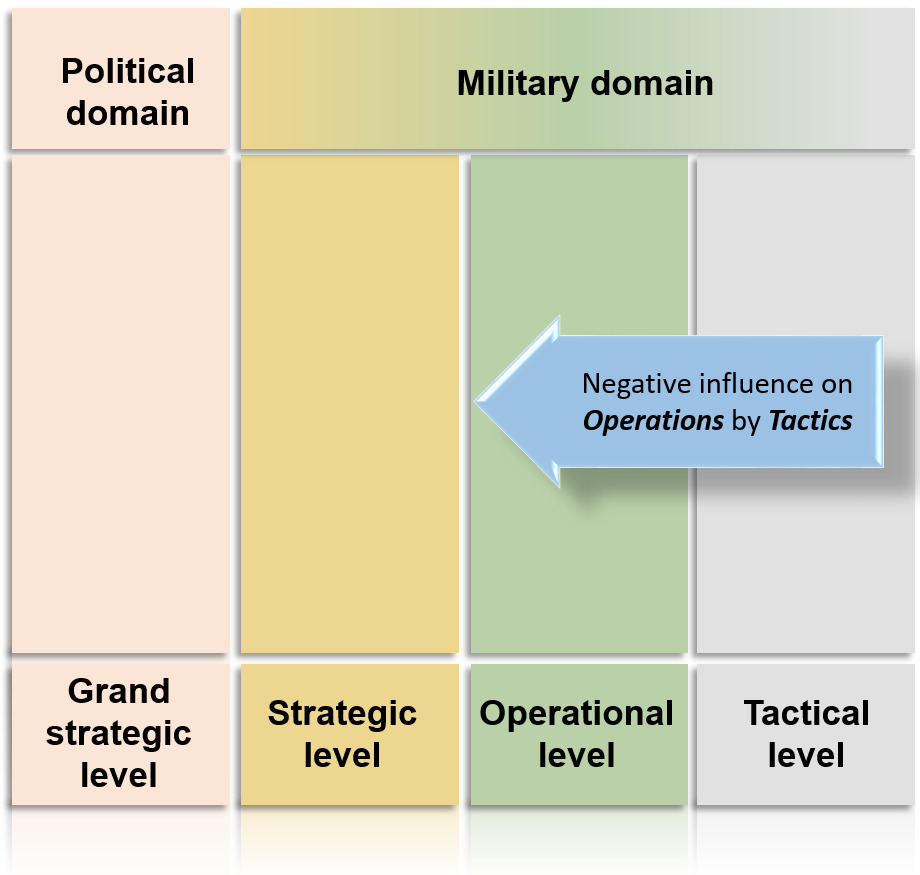
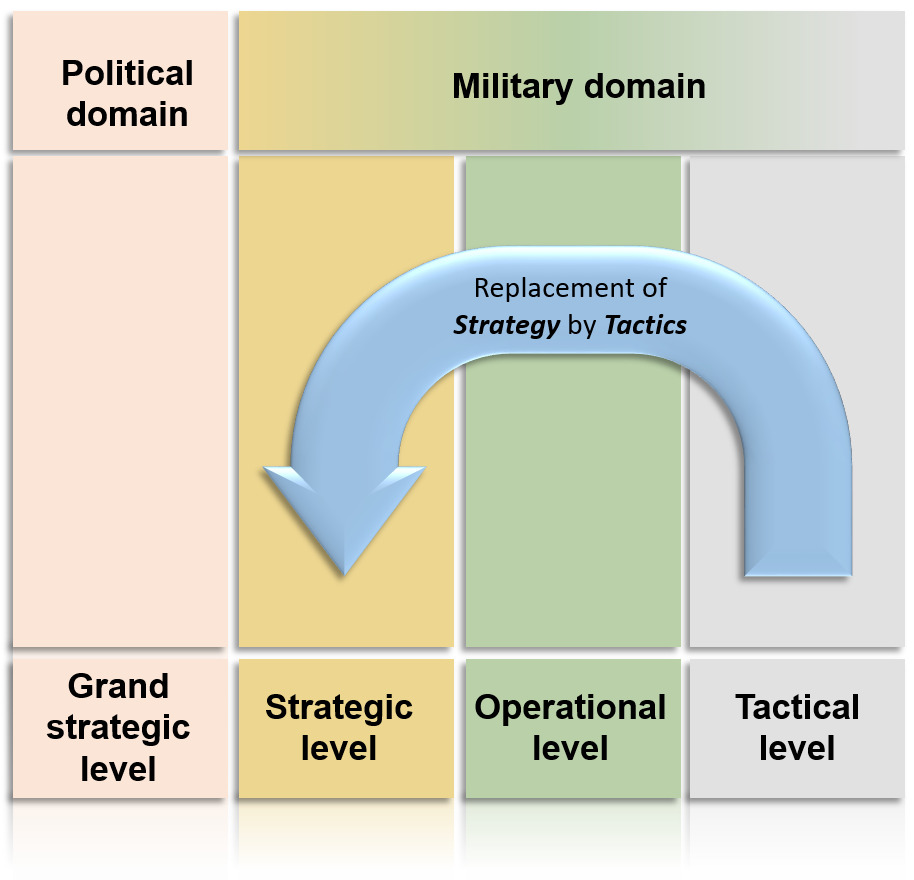
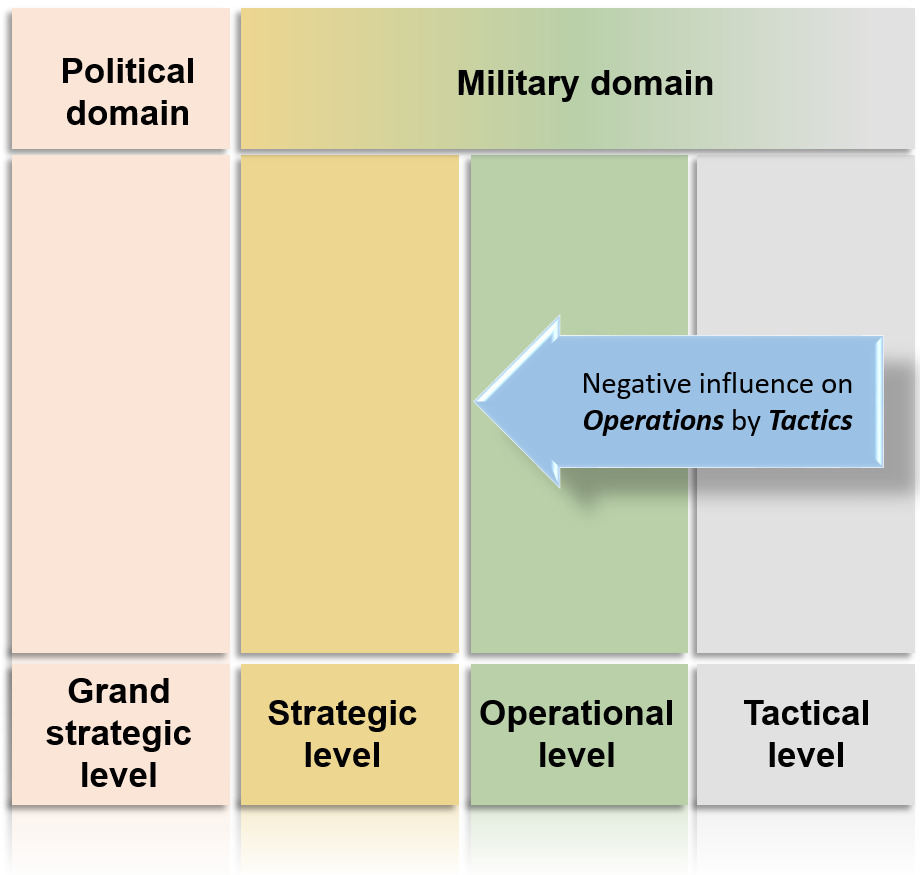
Zweibelson (2011) claimed the United States (US) Army had an ‘institutional preference for tacticizing all levels of war,’ by being ‘inclined to apply knowledge they have acquired from their tactical experiences to their operational functioning sphere’ (Zweibelson, 2011, pp. 1–2). Zweibelson’s cursory examination is noteworthy insofar as it differs from both Harkabi and Handel. Zweibelson considers tacticisation as a problem wholly contained within the military domain, and being the negative influence of the tactical level on the operational level (Figure 3).
Zweibelson identified the phenomenon of tacticisation in later works but provides no explanation (Zweibelson, 2015a, fn 32; Zweibelson, 2015b, en 55). He also did not credit any source for the term.
2.5. Peter Compo
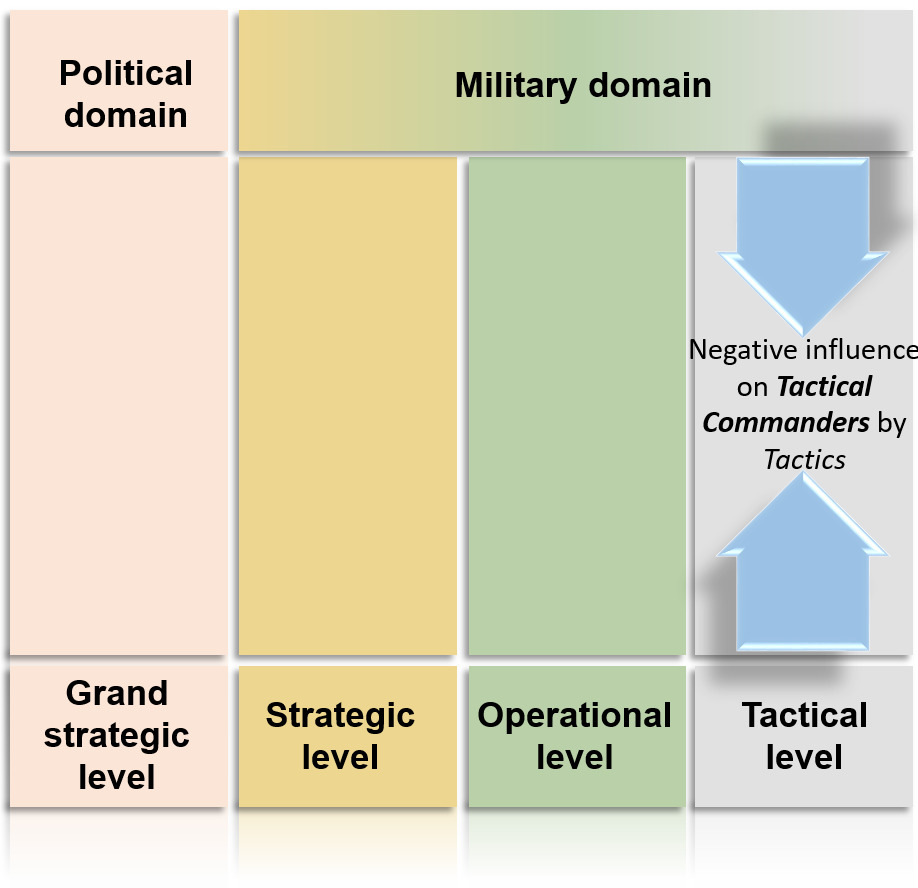
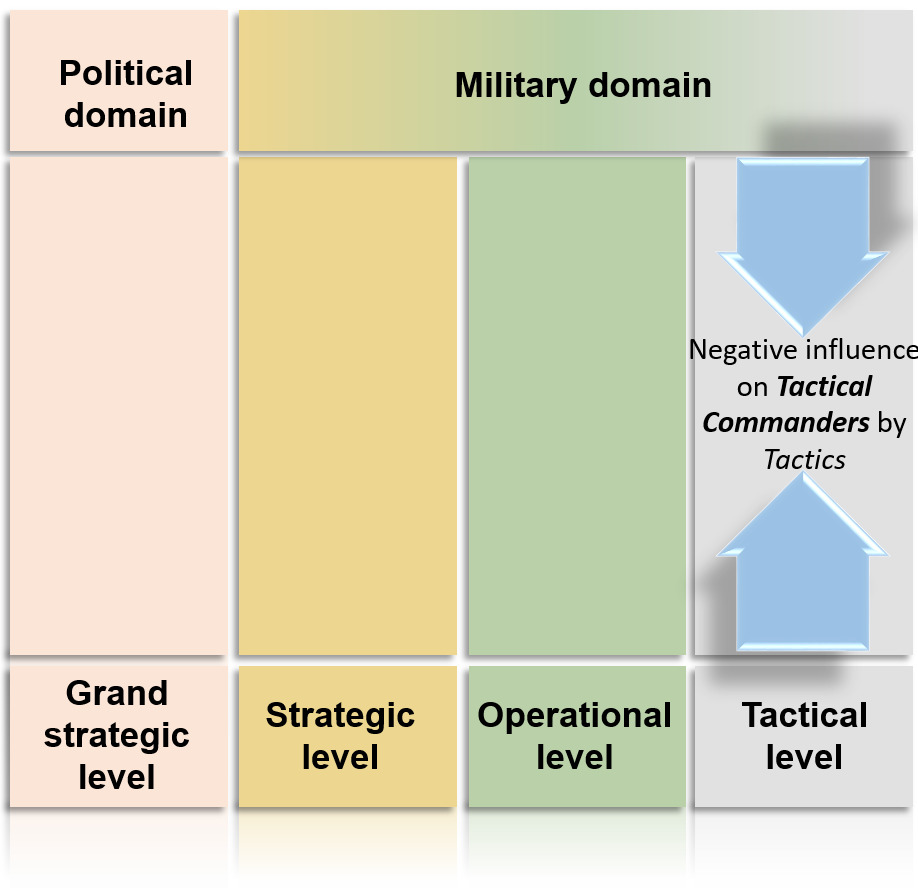
Compo situated tacticisation in terms of battles that are managed independently from the broader war. Specifically, whenever commanders believed winning a battle was valuable in and of itself, the criteria for ‘winning’ at the tactical level became independent from the overall strategy. These determinations formed the basis of tacticisation, which Compo described as ‘the seduction of a fixed and local definition of winning … a seduction by local victories … a strategy violation’ (Compo, 2022, pp. 88–89).
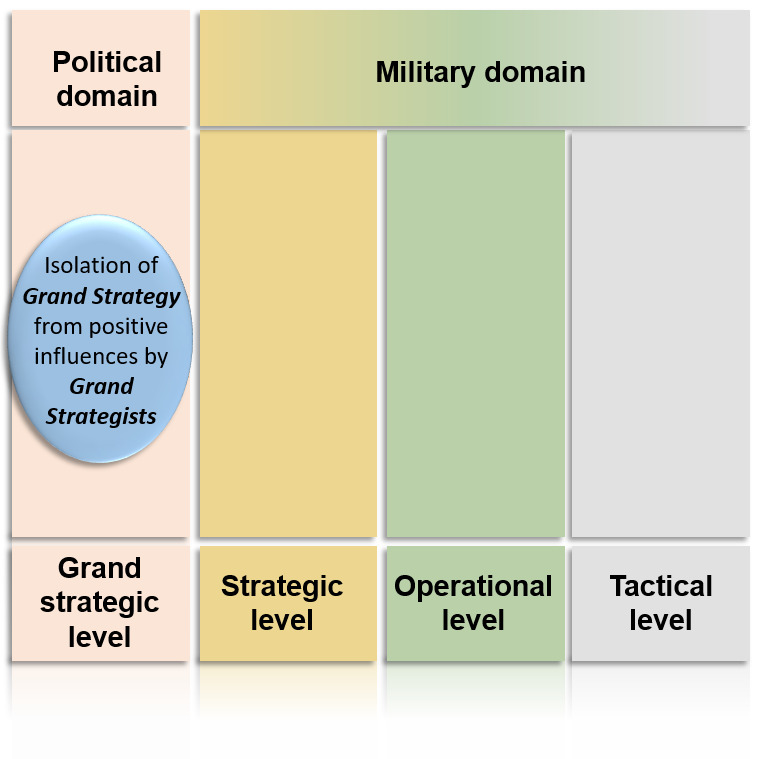
Despite crediting Handel (2001) with coining the term tacticisation (Compo, 2022, en 4), Compo’s brief examination suggests that he considers tacticisation far more narrowly: the rejection of military-strategic objectives, and prioritising of local (tactical-level) criteria focused on tactical victory in isolation. This is somewhat similar to Handel’s second (of his three) views on tacticisation – lower-level operational considerations defining strategy in war. However, Compo focusses on the tactical layer, not the operational. For Compo, tacticisation is a phenomenon occurring within the tactical layer itself. As such, Compo does not argue that tacticisation relates to the influencing or replacing of strategy, rather that it is a condition where strategy is rejected altogether. For Compo, tacticisation is the ignoring of strategy, due to the ‘seductive’ influence of tactics on local commanders who value tactical victory (Figure 4).
2.6. Mohamed Boraik
Boraik (2018, fn 89) credited several authors including Ben-Meir (1995), Handel (1994), Merom (2013) and Peri (2006) for identifying the drawbacks of militarising policy and tacticising strategy.
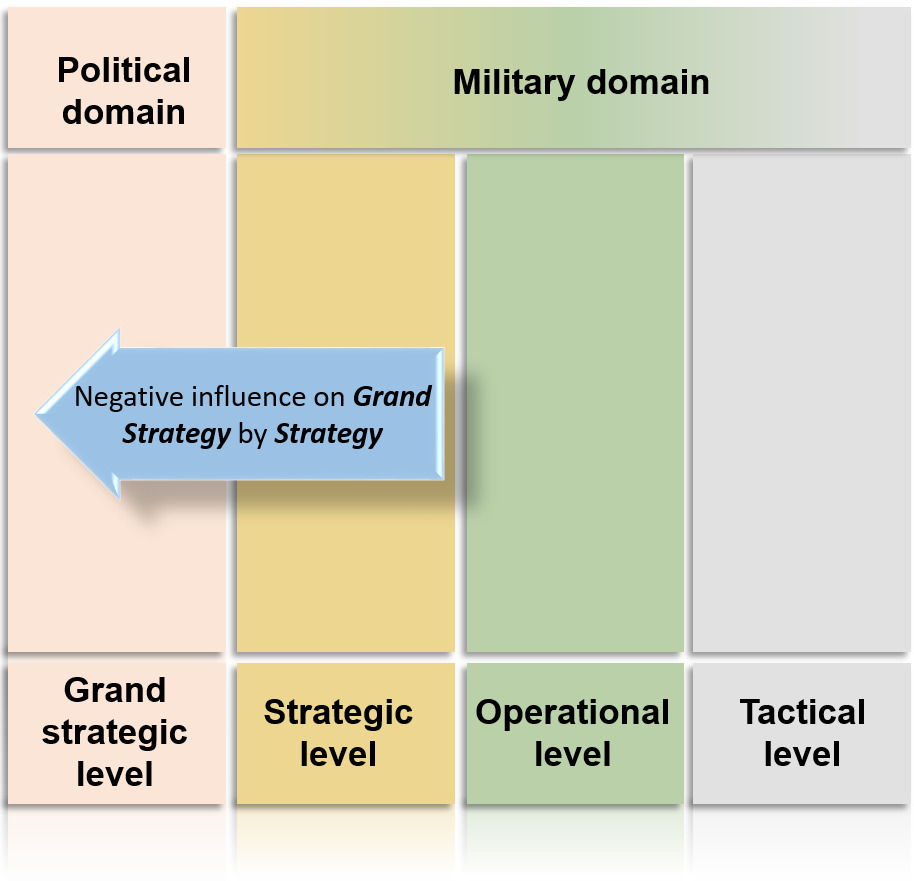
Boraik (2018) related tacticisation to the balance of power in the civil-military relationship, suggesting if the balance is skewed so the military is more powerful, the military can ‘hijack the policy and militarize policy options or “tacticize” strategy’ (Boraik, 2018, pp. 35–36, 272). Boraik used Israeli strategy as an example: ‘[w]hat undermined Israeli strategic practice was [inter alia] the military monopoly on strategy making … militarization and tacticization of strategy making were to be expected’ (Boraik, 2018, p. 140).
Consistent with Handel but not Harkabi, Boraik argues tacticisation is the negative influence from lower levels to higher levels. However, Boraik differs from both Harkabi and Handel in one important respect: he conceived tacticisation as manifesting only when the politico-military balance of power is skewed far enough to allow the military to ‘hijack’ policy and ‘militarise’ policy options. Arguably, such highly skewed balances of power only occur in militarised societies, for example where the military is the government. Such extreme cases are useful because any definition and explanation of tacticisation should accommodate extremes as well as norms.
Assuming the military-strategic level controls lower levels so they cannot unilaterally influence the grand-strategic level (a reasonable assumption: where the balance of power is heavily skewed in favour of Generals, they would almost certainly control attempted influences from lower military levels), Boraik’s conception of tacticisation becomes the negative influence of the military-strategic level on the grand-strategic level (Figure 5).
2.7. Charles Freilich
Freilich (2006) identified the ‘tacticalization’ of strategy as part of a broader ‘pathology’ of ‘extreme politicization of the Decision-Making Process … reinforced by short-term perspectives, [and which] dictates the political wisdom of avoiding clearly defined policy objectives and of maintaining constructive ambiguity’ (Freilich, 2006, pp. 645–646). Freilich did not credit any source for the term.
Frustratingly, Freilich combined his explanation of tacticalisation with another phenomenon, ‘dynamic incrementalism’. Elements of his explanation applying only to tacticalisation are therefore indiscernible. Furthermore, Freilich did not define either phenomenon, providing only an explanation of what the combined phenomena tended to result in:
Major policy achievements are typically the cumulative, incremental – often unintended –outcome of a series of ad hoc solutions to immediate needs, rather than of a consciously and deliberately chosen course of action. Decision-making is thus characterized by the tactical, rather than the strategic (Freilich, 2006, pp. 646–647).
Freilich’s brief examination of ‘tacticalisation’ in conjunction with ‘dynamic incrementalism’ means little of value can be discerned other than to recognise his explanation is significantly different from both Harkabi and Handel’s. Further, if Zweibelson conceived tacticisation as a problem of the military domain, Freilich argued the opposite: tacticalisation is a problem confined to the political domain, where ‘extreme politicisation’ of processes and short-termism negatively influence grand-strategic objectives, biasing them towards ambiguity and ad hocery (Figure 6).
2.8. Dima Adamsky
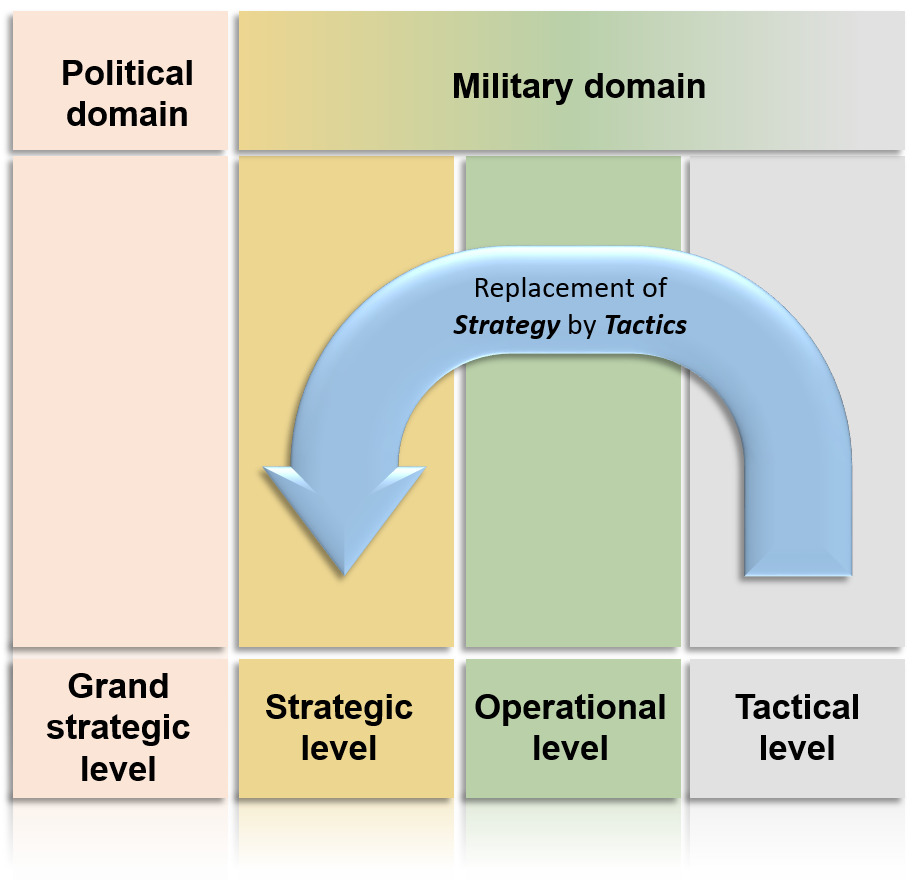
Adamsky cited both Handel (1994) and Freilich (2006), (Adamsky, 2010, p. 214, en 178). Adamsky provided a definition of tacticisation, albeit one heavily influenced by Israeli geopolitical circumstances: ‘replacing strategy with swift military improvisations driven by tactical thinking’ and suggested it resulted from environments of ‘constant siege, instability, and uncertainty’, meaning ‘decision-making tend[s] to concentrate on short-run, day-to-day operational matters at the expense of comprehensive long-term strategic thinking … result[ing] in providing ad hoc solutions to immediate problems’ (Adamsky, 2010, p. 116).
Like Handel, Adamsky conceived tacticisation’s direction of movement as being from below to above. Adamsky’s discussion on tacticisation related to military strategy only, as affected by tactical considerations alone (vice other levels of the military domain). Like Zweibelson therefore, Adamsky viewed tacticisation as a military-specific problem. The starkest difference to other scholars is that for Adamsky, tacticisation related not to an improper influence on strategy, but to the replacement of it (Figure 7).
2.9. Donald Stoker
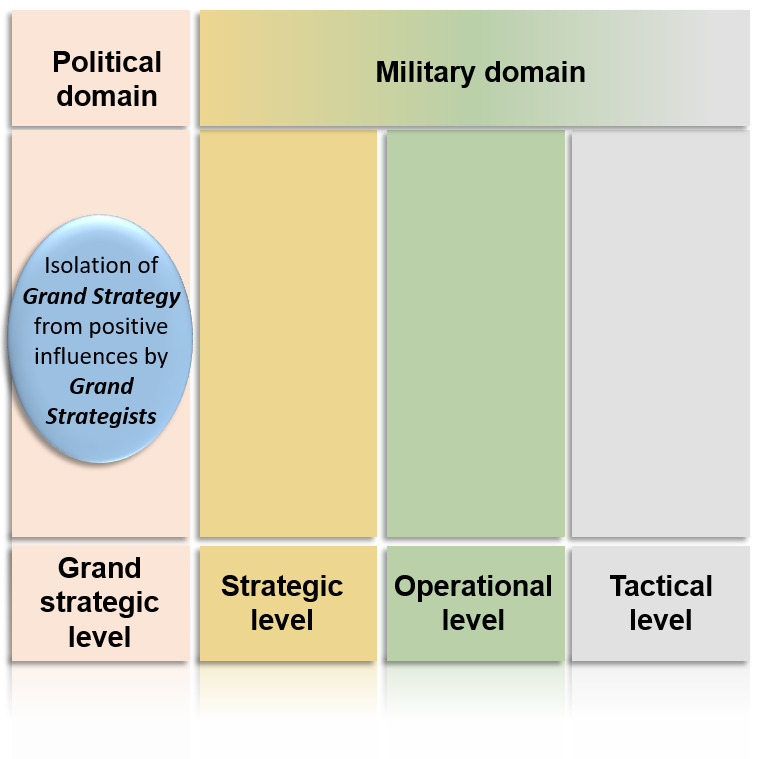
Stoker cited Handel (2001) for the term tacticisation (Stoker, 2019) but, unlike Handel, argued it applied to political leaders who ‘don’t understand the political aim … have a poor understanding of the use of force … and fail to commit sufficient forces’ resulting in ‘badly waged, perpetual, and protracted wars’. Such leaders also perpetuated ‘bad ideas’ and ‘intellectually bankrupt’ concepts such as ‘hybrid war’ and ‘Continuum of Conflict’, meaning strategy was founded on ‘myth and misunderstanding’ (Stoker, 2019, pp. 226–229; Stoker & Whiteside, 2020, pp. 33–36).
Stoker’s cynicism does not reflect Harkabi or Handel’s conception of tacticisation. Harkabi went to some length to explain politicians did not require a detailed understanding of warfighting ways and means. Both Harkabi and Handel associated the passivity of the political domain with tacticisation, but it does not necessarily follow that such inaction is the product of ignorance, as Stoker asserted. Like Adamsky, Stoker did not associate tacticisation with influence. In contrast, however, Stoker viewed tacticisation not as the replacement of strategy, but as the self-imposed isolation of the political domain and its grand strategy, from outside influences. For Stoker, strategy became tacticised when it was constructed by the elite independently from, and without an understanding of, military realities. The absence of influence from the military domain was the fundamental problem (Figure 8).
2.10. Kobi Michael and Eyal Ben-Ari
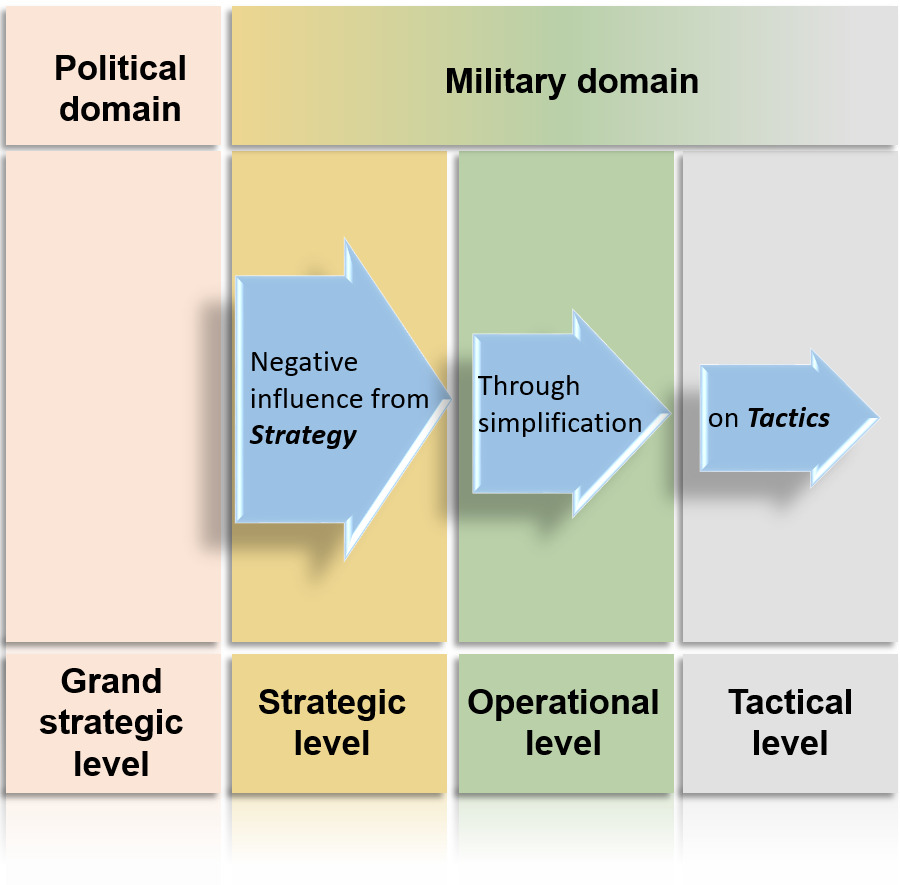
Michael and Ben-Ari did not credit any source for the term tacticisation but associated it with the culture and structure of military organisations (Michael & Ben-Ari, 2011, pp. 657–669). Consequently, they – like Zweibelson and Adamsky but unlike Harkabi and Handel – viewed tacticisation as a military-specific phenomenon. Indeed, Michael and Ben-Ari argued tacticisation was an intractable difficulty for the military:
[S]tructural differentiation within military organizations between the planning and implementing levels … [means] the problem is operationalizing [goals] … translation between higher and lower levels inevitably involves simplification … [which] creates huge difficulties in operationalizing the abstract insights and understanding of the strategic level down to the level of the combat units (Michael & Ben-Ari, 2011, p. 669).
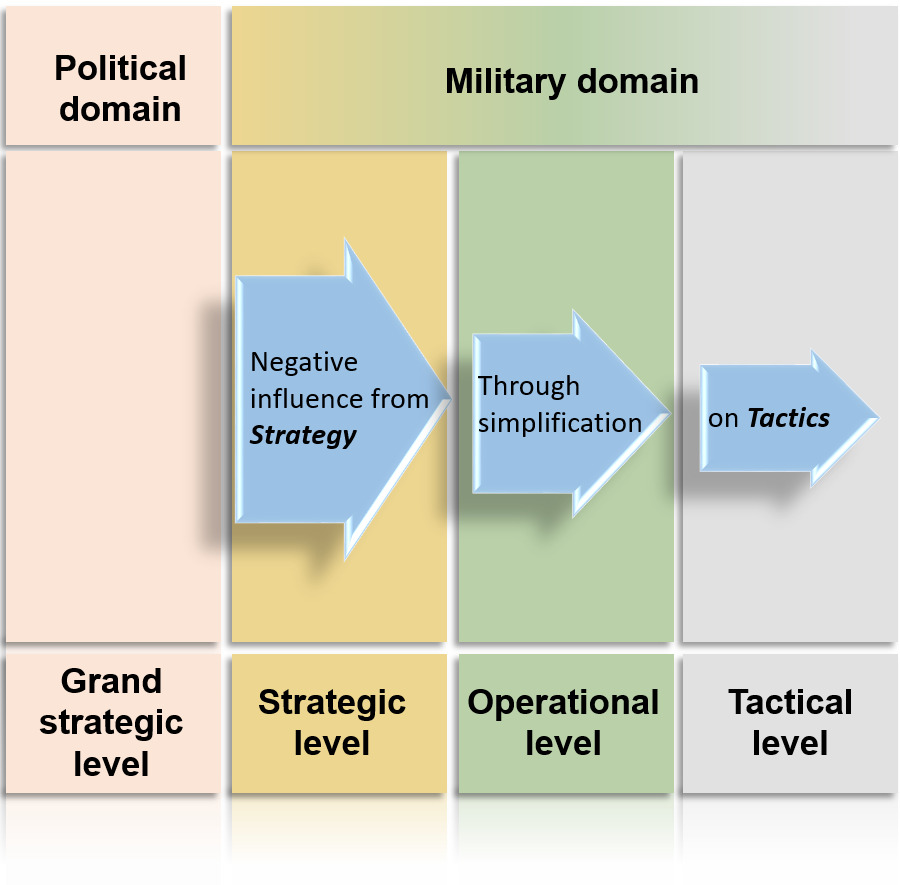
Michael and Ben-Ari therefore conceived tacticisation as the simplification of strategy through each military level, to enable implementation (Figure 9). It follows that unless the underlying cultural and structural problems are ‘corrected’ – which would likely result in a range of new difficulties for the military – tacticisation is an issue to be managed, not a problem to be solved.
While the military organisation may be a special case, it is difficult to argue that tacticisation, as conceived by Michael and Ben-Ari, is a problem unique to military organisations: any multi-layered entity responsible for addressing complex problems will likely face the phenomenon of tacticisation in some form.
2.11. Eliot Cohen
Cohen provided a definition of tacticisation, being ‘the reduction of a large strategic problem to a matter of mere tactics’ (Cohen, 2016, p. 137). While Cohen cited Handel for the term tacticisation, he did not identify a specific work, nor did he examine the concept except to provide a single example, being the US government’s handling of radical Islam which promoted ‘the fetishization of one tool, manhunting chiefly with missile-armed drones, [which] took the place of a deeper strategic response’ (Cohen, 2016, p. 137).
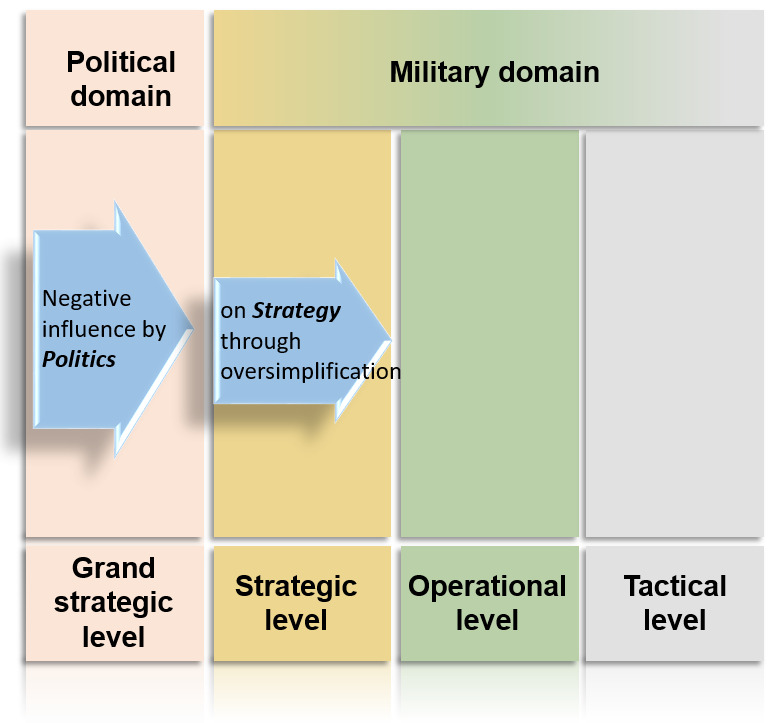
There are parallels between Cohen and Harkabi. First, unlike all other scholars surveyed thus far, both view the direction of tacticisation’s influence as being from the political domain to the military domain. Second, the nature of this influence is reductionist: Harkabi argued tacticisation resulted in the ‘tendency to wage … war as if it were a battle’ (Harkabi, 1988, p. 93). Cohen’s definition suggests tacticisation is the oversimplification of strategy (Figure 10). Cohen does not, however, recognise Harkabi’s concept of dual failure. Cohen’s concept of simplification differs from Michael and Ben-Ari’s because it manifests within the political, not the military domain.
2.12. Avi Kober
Kober discussed tacticisation in several works but did not credit any source for the term. In Democracies and Small Wars, he argued:
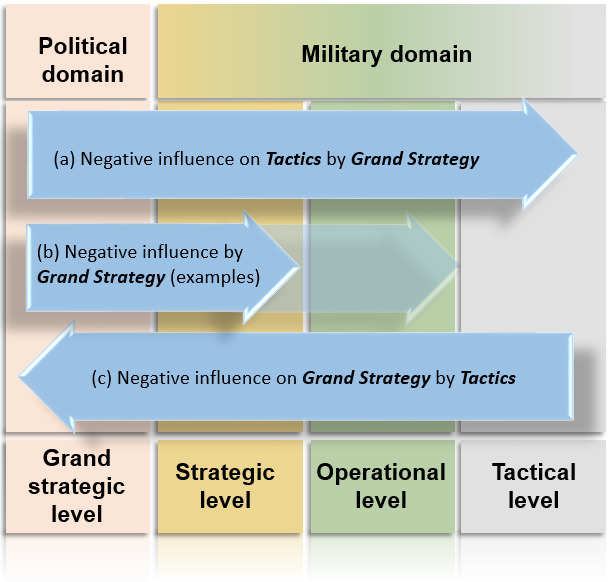
[P]olitical control over the conduct of war is usually exercised … from the upper, grand-strategic level all the way down via strategy … to tactics. In the postmodern era … this chain of command has been shattered [by] a combination of societal-political constraints … and technological capabilities … Given the particular sensitivities and vulnerabilities of Western democracies involved in LIC [Low Intensity Conflicts] and the existence of unprecedented effective information sources and means of command and control at the political leadership’s disposal, the political echelon often finds itself directly interfering in tactical matters. This bypassing of the strategic and operational levels is a manifestation of the ‘tacticization’ of grand-strategy (Kober, 2003, 2011, p. 160).
Kober’s conception is different and interesting in several ways. First, Kober argued certain kinds of warfare – specifically LIC and, from another article, warfare involving high concentrations of firepower (Kober, 2001) – are more prone to tacticisation. No other scholar considers whether the effects of tacticisation vary with the character of war. Second, only Harkabi, Cohen and Kober view tacticisation as a downward influence from the political domain to lower levels. Kober goes further, arguing tacticisation was one of two distinct and simultaneously acting phenomena, the other acting in the opposite direction as an influence from the military domain into the political domain. This dual phenomenon was a ‘relationship between the higher strategic echelons and the lower ones … the simultaneous “strategization of tactics” and the “tacticization of strategy”’ (Kober, 2016, p. 4). The most extreme form occurred when grand strategy and tactics were connected. Here, the ‘political echelon … finds itself directly interfering in tactical matters and/or restricting operations or battles, bypassing the strategic and operational levels’ (Kober, 2016, p. 19). Kober classified the connection between these extremes as the ‘tacticization of grand-strategy’ and the ‘grand-strategization of tactics’ (Kober, 2016, pp. 16, 85, 142–143). Kober does not elaborate, but presumably strategisation manifests as the military domain improperly influencing grand strategy by providing tactical ‘solutions’ as if they constituted strategy (Figure 11).
_tacticisation_of_grand-strategy__(b)_examples_of_tacticisation_.png)
2.13. Colin Gray
Arguably, Gray has contributed most to the subject. He generally cited Handel (1994, 2001) for the term tacticisation but never cited Harkabi (1988). His first articulation of the problem of tacticisation appeared in 1990, well before Handel’s adoption of the term in 1999, and only two years after Harkabi’s examination was published in English. Gray argued American decision-makers tended to focus on ‘the technical, tactical, and – rarely – the operational level of war, but never, at least not competently, on national military or grand strategy’ which resulted in a ‘fail[ure] to recognize that they have confused tactics or operations with strategy’ (Gray, 1990, p. 95). Gray provided various examples, including a scathing critique of the plan to substitute extended deterrence with a policy of ‘discriminate deterrence’ using advanced, high-precision conventional weapons in place of nuclear weapons. For Gray, the plan was ‘counterfeit strategy; it is tactics and technology masquerading as strategy’ (Gray, 1990, p. 273).
Gray introduced the term ‘tacticisation’ explicitly in 2007, with specific relation to airpower. Gray criticised America for having ‘a severe strategy deficit,’ arguing it ‘is, and has long been, guilty of what is known as the “tacticization” of strategy … [It] does tactics well and tends to expect success at that level to translate automatically into strategic victory’ (Gray, 2007, p. 4). Unfortunately, Gray says nothing further about the concept, referring readers to Handel’s work.
Gray’s initial conceptions are inconsistent with both Harkabi and Handel, mirroring instead Kober (Figure 11), albeit with somewhat differing causal factors in play. Unlike Kober, however, Gray does not distinguish between tacticisation and strategisation; for Gray, both are elements of tacticisation.
By 2009, Gray had more to say. He argued the misnaming of so-called ‘Strategic Forces’ such as the US Air Force’s Strategic Air Command (USAF SAC) was fundamentally problematic. Not only did it facilitate a misunderstanding of what, intrinsically, such military instruments could accomplish (strategic effects, or even strategic ends, in the case of SAC), but it also implied forces not so defined (for example the USAF’s Tactical Air Command) could not achieve the same effects. In these cases, the ‘military instrument itself is collapsed into its consequences [and] what tends to be the result is … the “tacticization of strategy”’ (Gray, 2009, p. 41). Gray’s conception has changed from his 1990 work: he now described only one influencing path, from the military domain to the political domain. This conception is a combination of Handel (Figure 2) and Boraik (Figure 5).
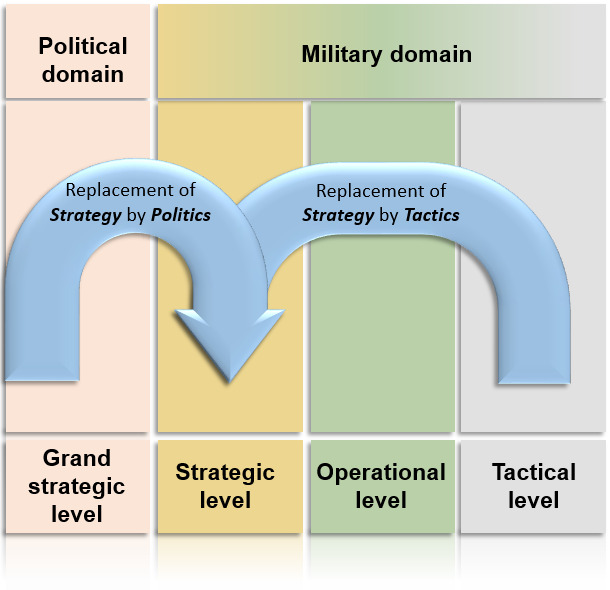
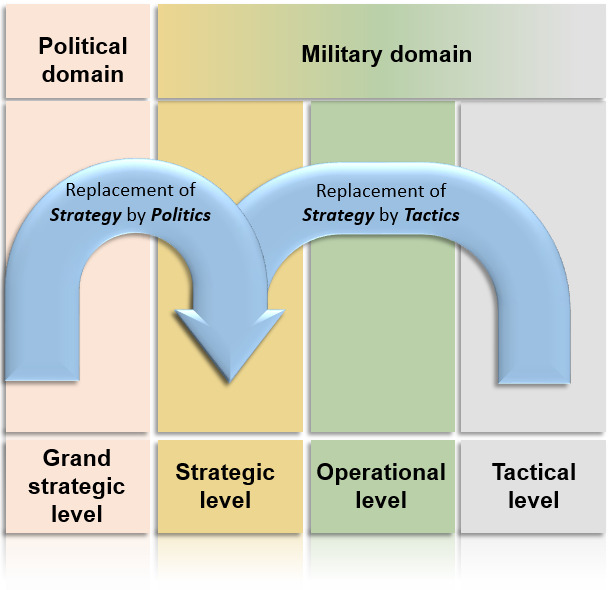
In 2010, Gray published The Strategy Bridge: Theory for Practice, the first of a three-volume trilogy on strategy, which demonstrated his thinking had evolved further. Gray now argued tacticisation occurred in the absence of strategy, involving ‘encroachment on the part of the political, operational, and tactical functions. Such mission creep may be characterized as the politicization and tacticization of strategy … [whereby] enhanced roles for politics and tactics substitute for, rather than capture, strategy’ (Gray, 2010, p. 247). Nothing more is said, with readers again referred to Handel for more on the ‘malady of the tacticization of strategy’. Gray now saw two forces acting: the ‘politicisation of strategy’ which encroaches on the strategy void from above, while operations and tactics encroached on the void from below. Both influences replaced strategy. A later work repeats this conception verbatim (Gray, 2011, p. 43, en 11). This conception can be viewed as an evolution from Adamsky (Figure 7): two forces, one from below and one from above, replace strategy (Figure 12). It is problematic that Gray continues to reference Handel, because their perspectives are very different: compare Figure 12 and Figure 2.
A monograph published in 2012 provided a consistent, and similarly brief, examination. It emphasised tacticisation occurred in the absence of strategy. Interestingly, Gray explicitly acknowledged partial disagreement with Handel. While discussing the distinctive natures of politics and war, Gray argued:
Indeed, misunderstanding of the connections between war and politics is a notable contributor to what Michael I. Handel somewhat mistook as the ‘tacticization of strategy.’ In point of fact, when (tactical) military activity itself is confused with its political purpose, strategy (though not strategic effect) is absent, not ‘tacticized’ … Unwise categorization encourages the tacticization, which means the neglect, of strategy (Gray, 2012b, pp. 38, 48).
Gray also released a book dedicated to airpower in 2012 which referenced tacticisation. Reiterating his earlier objections to conflating tactical tools with the strategic effects they may or may not deliver in each instance of tactical use, Gray argued:
When a weapon and its consequences are conflated, the result is neglect of the strategic function. It is needlessly difficult to think strategically about the value of a military force when that force is predesignated as inherently ‘strategic.’ The strategist’s question ‘So what?’ may well not be posed, let alone answered; weapons and actions themselves are defined as strategic. There is no apparent need or room for strategic effect. What the military instrument does is taken to be such effect. This historically familiar phenomenon is characterized as the tacticization of strategy (Gray, 2012a, pp. 34, 247, 291).
Here, Gray argues only for the bottom-up influence of tacticisation, ignoring the top-down influence illustrated in Figure 12. In the same volume, Gray extended his previous assertion that tacticisation occurred when strategy was absent, suggesting it was the absence of political ends which first drove the impossibility of strategy, in turn resulting in the inevitability of tactics supplanting strategy:
[T]he strategic function requires a purposeful, mutually enabling marriage among (political) ends, (strategic) ways, and (military and extramilitary) means. When the political ends are absent, unclear, or flatly contradictory, strategy worthy of the name is impossible, and one is reduced to an effort comprising tactics alone. This tacticization of strategy is inevitable when the strategy function cannot be performed because of the absence of identified, firm, and achievable political goals (Gray, 2012a, p. 247).
In 2013, Gray published the second volume of his three-volume trilogy, in which he diverged further from his earlier views, and voiced stronger opposition to Handel, by arguing strategy cannot be tacticised:
Despite the popularity of the thesis, it is a categorical error on a major scale to believe that strategy can be ‘tacticized’. Strategy and tactics are different in nature and cannot mate to produce a hybrid offspring … Handel['s] … thesis that strategy can be tacticized is a popular but nonetheless categorical impossibility … tactics do not magically become strategy, though they may stand in for them (Gray, 2013, pp. 12, 185–186).
Gray added little by way of explanation, aside from the following:
[M]ilitary technology appeals to the senses and captures the imagination. The problem is that this seduction can fill all of the limited space available for appreciation and comprehension, so that strategy is not ‘tacticized’, as frequently mistakenly is claimed, rather it is shorn of its humanity in favour of inert tools, no matter how technically interesting, tactically efficient, and in some cases even aesthetically appealing they are judged to be (Gray, 2013, p. 159).
No scholar – certainly not Handel – contended tactics could become strategy by direct replacement, as if the two activities are directly substitutable. Tacticisation is a problem for the very reason it cannot replace strategy. Gray’s argument concerns semantics more than substance. He contests the inherent logic of the label, not the phenomenon. His underlying argument remained that there is a problematic phenomenon involving strategy being ‘cut down’ to the degree it no longer resembled strategy, with tactics then filling the void. Arguing that an imperfect label invalidates the concept confuses the matter.
In the final volume of his strategy trilogy, Gray continued his semantical argument that tacticisation concerned the absence of strategy, and its replacement with tactics:
Neatly compelling though [tacticisation] may be, it is likely to mislead and confuse, rather than enlighten. The reason is that strategy cannot be tacticized and it is a serious error to express that conception in a way that indicates its feasibility. If tactics are effectively commanding behaviour, then strategy must be absent. There is no tactical variant of strategy; they are distinctive phenomena (Gray, 2014, p. 62).
By 2015, Gray had evolved his thinking again, viewing tacticisation in the following context:
Although civilian governance needs to listen to professional military advice concerning what appears to be feasible as action … policy is what the use of tactics in pursuit of strategy has to be about … Some scholars have noticed what they have chosen to term a ‘tacticization of strategy’ … While there are problems in the conduct of war … the ‘devouring’ of strategy by operations should not be counted among them (Gray, 2015a, pp. 21–23).
Tacticisation was therefore predominantly a problem for military commanders, who needed to recognise the supremacy of politics and ensure political direction was understood and followed. Tacticisation occurred when military commanders failed to comprehend the key role politics and policy play at the grand-strategic level, and substituted strategy with tactics. Gray did however recognise an inherent difficulty, being the:
‘pragmatic challenge of combat … can be so close to the edge of military feasibility as to pose real difficulty for the higher reaches of the command chain … [the] immediate and pragmatic logic to what needs to be done … all too easily causes strategy to fly out of the window’ (Gray, 2015a, pp. 21–22).
Gray had softened his assertions that strategy cannot be tacticised. Further, his earlier conception of tacticisation as a two-element phenomenon, involving forces from both above and below – that is, his earlier alignment with Kober (Figure 11) and subsequent evolution towards a new conception (Figure 12) – had been simplified. Tacticisation was now to be conceived as a single-element problem associated with military commanders who fail to comprehend the key role politics and policy play at the grand-strategic level and hence substitute strategy with tactics. Gray’s conception had returned to a mirror of Adamsky’s (Figure 7). Gray continued his practice of citing Handel, claiming he provided the ‘leading example’ in exposing the problem of tacticisation (Gray, 2015a, en 27). This is unfortunate: tacticisation may be ‘clear enough’ to Gray, but his shifting position on the concept must surely confuse his readers. Table 1 provides a chronology of Gray’s conceptual evolution of tacticisation.
3. Conclusion
The literature review demonstrates that there is little agreement on what tacticisation is, why it manifests, and what can be done about it. Over 60 authors employ the term in their work with no description of what it means. The majority of these authors credit Handel (1994, 2001) as the originator. Only four (Lavie, 2010; Naor, 2005; Petrelli, 2013; Sayigh, 1992) cite the originator of the concept: Harkabi (1988). Of the thirteen scholars that explored tacticisation in some form, none conceived the concept in the same way except for Gray and Adamsky. A wide range of disparate reasons are given for what causes tacticisation, and little is offered from any author by way of managing it. No accepted definition of tacticisation is evident from the literature. One work (Rabaey et al., 2004) argues tacticisation can provide a positive benefit in some circumstances.
Interestingly, the thirteen authors that explored tacticisation conceived of it as occurring along different ‘vectors’ of influence: top-down, bottom-up and, in one case, horizontal (Compo, 2022). How many vectors are claimed to exist, varies. Further, some authors argue the vector(s) exist within a single level of the four-level heuristic (with little agreement on the actual level), while others argue the vector(s) span two or more levels. This demonstrates the lack of agreement in terms of how tacticisation manifests and influences strategy.
Notably, of the thirteen scholars that explored tacticisation, six are Israeli: Harkabi, Freilich, Adamsky, Michael, Ben-Ari and Kober. This may indicate a relationship between tacticisation and cultural, geopolitical or societal factors. While the Israeli scholars in particular should have known Harkabi’s work existed, none cited Harkabi (1988) as a source. Indeed, only Adamsky cited any source whatsoever (Handel, 1994). Of the remaining seven scholars, five cited Handel (1994, 2001), with only Handel citing Harkabi (1988), and he did so only in his earlier work. This may suggest that neither Harkabi nor Handel can be considered authorities on the topic.
‘Tacticisation of strategy’ is abridged to ‘tacticisation’ for the remainder of this study. British grammar is adopted, except for direct quotes adopting American convention.